
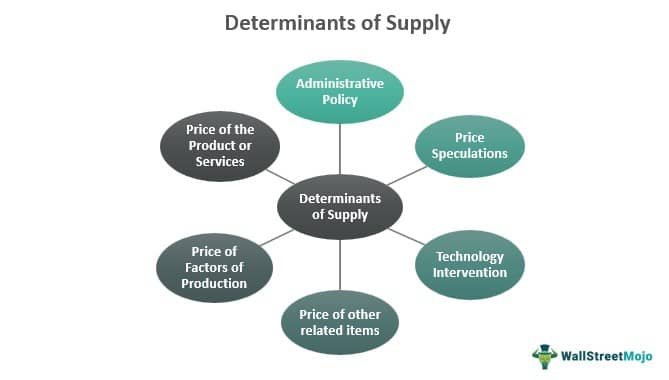
Determinants of supply refer to the various factors influencing the quantity of a product or service that a producer is willing to offer in the market. These determinants play a crucial role in shaping the supply curve and are essential for understanding market dynamics. Factors such as input costs, technology, government policies, and expectations all impact supply levels. By analyzing what are determinants of supply, we can gain insights into how producers make decisions and how markets respond to changing conditions. Let’s delve deeper into these key drivers that shape the supply side of the market.

Exploring the Key Elements that Shape Supply: What are Determinants of Supply?
Welcome, young learners! Today, we are going to dive into the fascinating world of economics and explore a crucial concept known as the determinants of supply. Have you ever wondered why the prices of certain things go up or down? Or why some products are abundant while others are scarce? Well, the answers lie in understanding the determinants of supply. So, grab your thinking caps as we embark on this exciting journey!
The Basics of Supply
Before we delve into the determinants of supply, let’s first understand what supply actually means. In simple terms, supply refers to the quantity of a good or service that producers are willing to offer for sale at various prices. The law of supply tells us that as the price of a product goes up, the quantity supplied by producers also increases, and vice versa.
What Drives Supply?
Now, you may be wondering what factors influence how much of a product producers are willing to supply. These factors, known as determinants of supply, play a crucial role in shaping the supply curve. Let’s take a closer look at some of the key determinants:
1. Resource Prices
One of the most significant determinants of supply is the cost of resources used in production. Think about it – if the price of raw materials, labor, or other inputs needed to produce a good increases, it becomes more expensive for producers to make that product. As a result, the supply of the product decreases.
2. Technology
Advancements in technology can also impact supply. When new technologies are developed that make production more efficient, producers can lower their costs and potentially increase their supply. For example, the invention of automated machinery has revolutionized many industries, leading to higher levels of production.
3. Number of Sellers
The number of producers in a market can influence supply as well. If more sellers enter a market, competition increases, which can drive prices down. On the other hand, if producers exit the market, supply decreases, leading to potential price increases.
4. Expectations of Future Prices
Producers’ expectations about future prices can also impact supply. For example, if producers anticipate that prices will rise in the future, they may reduce supply now to take advantage of higher profits later. Conversely, if prices are expected to fall, producers may increase supply to sell their goods before the price drops.
5. Government Regulations
Government policies and regulations can have a significant impact on supply. For instance, taxes, subsidies, and import/export restrictions can influence the cost of production and, consequently, the supply of goods and services in the market.
Putting It All Together
As you can see, the determinants of supply are like puzzle pieces that come together to form the full picture of how much of a product is available in the market. By understanding these factors, we can gain insights into why prices fluctuate, why certain products are abundant while others are scarce, and how producers make decisions about what to supply.
So, the next time you visit a store and see shelves stocked with your favorite products, remember that behind those goods are the determinants of supply working their magic to ensure that you have access to the things you need and want. Economics truly is a fascinating subject that shapes the world around us in so many ways!
Keep exploring, keep learning, and remember that knowledge is the key to unlocking endless possibilities. Until next time, happy learning!
What are the Determinants of Supply? | Explained | IB Microeconomics | IB Economics Exam Review
Frequently Asked Questions
What factors influence the supply of a product or service?
The determinants of supply include the cost of production, technology, government regulations, and the number of suppliers in the market. The cost of production, such as raw materials and labor costs, directly impacts how much a producer is willing to supply at different price levels. Technological advancements can also affect supply by improving production efficiency. Government regulations, such as taxes or subsidies, can either encourage or discourage suppliers. Additionally, the number of suppliers in the market can influence overall supply levels.
How does changes in input prices impact supply?
Changes in input prices, such as the cost of raw materials or labor, have a direct impact on supply. If input prices increase, the cost of production also increases, leading to a decrease in supply as producers are less willing to supply goods or services at the same price levels. Conversely, if input prices decrease, the cost of production goes down, resulting in an increase in supply as producers are more willing to supply at various price points.
Can technology affect the supply of a product?
Technology plays a crucial role in determining supply levels. Advancements in technology can lead to increased efficiency in production processes, which can lower costs and increase supply. For example, automation or improved machinery can help producers create more goods or services in a shorter amount of time, boosting overall supply. On the other hand, outdated technology may hinder production efficiency and limit supply potential.
Final Thoughts
In conclusion, the determinants of supply play a crucial role in influencing the quantity of goods that producers are willing and able to offer in the market. Factors such as input prices, technology, government regulations, and expectations all contribute to shaping supply curves. Understanding these determinants allows businesses and policymakers to anticipate market trends and make informed decisions. By analyzing what influences supply, stakeholders can better navigate market dynamics and optimize their operations for success.